
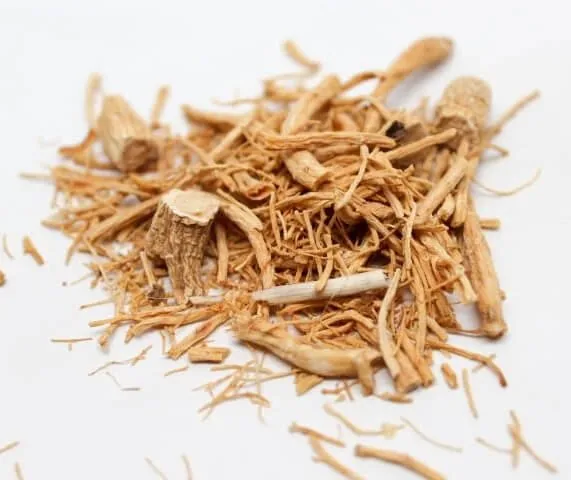
Eleuthero (Eleutherococcus senticosus, once sold as Siberian ginseng) is an adaptogen: an herb traditionally used to help the body handle physical and mental stress. People take it for steady energy, stamina and focus without caffeine. Despite the old name, it is not a true ginseng.
What Is Eleuthero Root?
Eleuthero (Eleutherococcus senticosus) is a woody shrub native to the cold, harsh forests of Siberia, Northern China, Korea, and Japan. You may have seen it sold under the name "Siberian Ginseng" — though it's important to know that eleuthero is not true ginseng. True ginseng refers to plants in the Panax genus. Eleuthero belongs to a different genus entirely. The two are botanically related (both in the Araliaceae family) and share some similar effects, but their active compounds are completely different. In fact, the US government ruled in 2002 that eleuthero can no longer legally be marketed as "ginseng" in the United States — a distinction that matters because eleuthero deserves recognition on its own remarkable terms, not borrowed fame.
The Latin name senticosus means thorny or bristly — and this plant earns that name. It's covered in small, sharp spines that have earned it folk names like "Devil's Bush" and "Touch-Me-Not." This is a tough plant. It thrives in the deep cold of the Siberian taiga (the vast boreal forest that stretches across northern Russia), growing in rocky, nutrient-poor soils where temperatures can drop to minus 40 degrees. It survives where gentler plants cannot.
The part used medicinally is the root and root bark, which are harvested, dried, and extracted. The root is woody and fibrous — not the plump, starch-filled root you might picture. It's a plant that stores its energy as chemistry rather than calories. Inside that fibrous root is a complex library of active compounds called eleutherosides, polysaccharides, and lignans that have fascinated researchers for decades.
Eleuthero is considered the classic example of an adaptogen — a plant that helps your body adapt to physical, mental, and environmental stress without causing harm. The term "adaptogen" was actually coined in large part through research on eleuthero. Understanding eleuthero means understanding what an adaptogen truly is, and why it's different from a stimulant.
Traditional Wisdom & Cold War ScienceThousands of Years of Wisdom — and a Cold War Secret
Eleuthero's story has two great chapters. The first spans two thousand years of traditional medicine in China, Korea, and Siberia. The second is one of the most remarkable chapters in the history of botanical science — and it unfolded during the Cold War arms race.
The Ancient Chapter
In Traditional Chinese Medicine, eleuthero was known as Ci Wu Jia and has been used for over 2,000 years. It appears in the foundational texts of Chinese medicine as a tonic herb for energy, longevity, and overall vitality. The great herbalist Li Shizhen, who compiled the definitive Chinese pharmacopoeia Bencao Gangmu in 1578, described Ci Wu Jia as beneficial for "tonifying energy and boosting vital essence" — language that maps closely onto what modern research now calls adaptogenic activity.
Among the indigenous peoples of Siberia and Northern China, eleuthero root was used to increase endurance during long hunting expeditions, protect against the cold, and sustain strength through brutal winters. Nanai hunters reportedly used it to increase their stamina. Korean herbalists used it for blood and kidney tonification. Japanese folk medicine used it for rheumatism and as an overall strengthening tonic. The consistent thread across all these traditions: more energy, better resilience to hardship, and improved ability to function under stress.
The Soviet Chapter — The Most Fascinating Story in Adaptogen Science
In the early 1950s, a Soviet pharmacologist named Dr. Nikolai Lazarev was working on a classified government project. The Soviet Union wanted a performance-enhancing substance — something that could give Soviet astronauts, soldiers, athletes, and factory workers an edge over their Western counterparts during the Cold War. The requirement was specific and demanding: the substance had to be safe for long-term use, had to improve non-specific resistance (meaning it improved overall performance and resilience across multiple systems, not just one), and had to produce a normalizing effect on the body — bringing things into balance rather than pushing them in a single direction like a drug or stimulant.
Lazarev called whatever met these criteria an "adaptogen" — a word he coined for this specific concept. His student and colleague Dr. Israel Brekhman took the research forward in the late 1950s and 1960s, and his team turned to eleuthero. After extensive testing, they found that eleuthero met every criterion for a true adaptogen. What followed was one of the most intensive programs of botanical research ever conducted on a single plant.
Over 35 years and more than 3,000 studies were conducted by Soviet scientists on eleuthero. The research database on this single herb rivals what has been published on most pharmaceutical drugs.
Soviet cosmonauts were given eleuthero before space missions to support immune function, endurance, and cognitive performance in extreme conditions. Soviet Olympic athletes — who dominated the Games from the 1960s through the 1980s — were given eleuthero as part of their training protocol. Many historians of sports medicine believe it contributed meaningfully to Soviet athletic dominance during that era. Factory workers in demanding industrial settings were given eleuthero to improve productivity and reduce sick days. Miners. Sailors. Long-distance truck drivers.
Perhaps most striking of all: in 1986, after the catastrophic nuclear accident at Chernobyl, workers involved in the cleanup and local residents were given eleuthero as part of their recovery support protocol. The Soviet medical establishment trusted this herb enough to use it in their most serious public health emergency.
When the Soviet Union fell and these research files became more accessible to Western scientists, the botanical world took notice. Today, eleuthero is recognized globally as one of the premier adaptogenic herbs — and the scientific foundation for that recognition was built in the laboratories of Cold War Soviet science.
Sourcing MattersThe Wildcrafted Difference
Consider the difference between a domesticated dog and a wild wolf. Both animals share the same ancestral DNA. But the wolf has spent every day of its life fighting for survival: hunting in deep snow, running miles across frozen ground, facing real predators and real scarcity. That relentless pressure has built an animal of extraordinary capability — lean, sharp, adaptive. The dog, raised in warmth with reliable food and no real threats, is a different creature entirely. Comfortable. Well-loved. But not capable of what the wolf can do.
Wild plants are the wolves of the herbal world. Eleuthero that grows in the harsh Siberian taiga — surviving brutal cold, poor rocky soil, insect pressure, competition from surrounding forest — has had to fight for every inch of its existence. That fight produces a plant packed with phytochemicals (the plant's own chemical defense and signaling molecules). The eleutherosides, polysaccharides, and lignans that give eleuthero its therapeutic power are produced in response to environmental stress. The harsher the environment, the more the plant invests in these protective compounds.
A farmed eleuthero plant, grown in a controlled greenhouse with ideal conditions, optimal soil, and consistent water, doesn't need to produce the same chemical arsenal. Its life is too easy. The result is a plant that looks the same on the outside but may be significantly less potent on the inside.
The eleuthero root in Drink Inc's Klara Boost is certified organic — grown without synthetic pesticides, herbicides, or chemical fertilizers. We source from growers who honor the plant's native environmental context, allowing it to develop the full phytochemical profile that makes it worth taking in the first place. Our alcohol-free liquid extraction process is designed to pull out and preserve those compounds in a form your body can absorb quickly and efficiently.
The ScienceWhat's Inside — Key Active Compounds
Eleuthero's active compounds are called eleutherosides — a unique class of compounds found only in this plant. They are not the same as ginsenosides, the active compounds in Panax ginseng. This distinction is why eleuthero has its own distinct pharmacological profile (the way it works in the body) separate from true ginseng.
Eleutheroside B (Syringin)
The most studied of the eleutherosides. Research has examined its immunomodulating effects (it appears to help regulate the body's natural defenses) and its adaptogenic activity that supports the body's stress response. Eleutheroside B appears to interact with the hypothalamic-pituitary-adrenal (HPA) axis — the hormonal command center that governs how your body responds to stress.
Eleutheroside E
Associated with the herb's anti-fatigue effects. Research suggests it may improve mitochondrial (your cells' energy-producing structures) function and help the body use oxygen more efficiently during physical exertion. This is likely one reason eleuthero has shown promise for endurance athletes — better oxygen use means more sustainable energy output with less metabolic waste (like lactic acid, the compound that makes your muscles burn during hard exercise).
Eleutheroside B1 (Isofraxidin)
A coumarin compound (a class of naturally occurring organic chemicals found in many plants) with anti-inflammatory properties. It may contribute to eleuthero's ability to reduce post-exercise inflammation and support recovery. Some research also suggests anti-tumor activity in laboratory studies, though this is early-stage science that has not been tested in human clinical trials.
Polysaccharides
Complex carbohydrate molecules (long chains of sugars) found in the root. These are the primary immune-modulating compounds in eleuthero. Research suggests they activate natural killer cells (NK cells — your immune system's first-response fighters against viruses and cancer cells) and macrophages (large immune cells that destroy pathogens and cellular debris). The polysaccharides appear to "prime" the immune system, making it more responsive without overstimulating it.
Lignans & Triterpenoid Saponins
Lignans (structural compounds found in plant cell walls) provide antioxidant activity and may have additional anti-cancer properties in lab studies. Triterpenoid saponins (soap-like compounds common in adaptogens) contribute to the overall adaptogenic effect — supporting the body's ability to maintain balance (homeostasis) across multiple physiological systems simultaneously. This multi-system action is what distinguishes adaptogens from single-target herbs or drugs.
Eight Ways Eleuthero Root May Support Your Health
Sustained Energy Without the Crash
Eleuthero doesn't give you a jolt like caffeine. Instead, research suggests it builds your energy reserves over time by supporting mitochondrial efficiency and better oxygen utilization. Athletes describe it as a deeper, more sustainable energy — not a spike followed by a crash, but a consistent, reliable baseline that holds up throughout long training sessions or demanding work days.
Stress Resilience & Adaptogenic Balance
This is the core of what eleuthero does. Research suggests it may help normalize cortisol (your main stress hormone) — meaning if your cortisol is too high (anxiety, poor sleep, tension), it may help lower it; if it's too low (burnout, exhaustion, brain fog), it may support it upward. This normalizing action — working in both directions toward balance — is the defining characteristic of a true adaptogen.
Cognitive Performance Under Pressure
Several studies have found that eleuthero may improve memory, concentration, and mental endurance under conditions of stress or fatigue. Soviet research documented improved cognitive test scores in workers and military personnel. More recent studies have explored its potential for cognitive support in older adults. The mechanism may involve improved cerebral blood flow and reduced inflammatory stress on brain tissue.
Supports the Immune System
Eleutheroside B has been studied for its effects on cellular processes related to the body's natural defenses. The polysaccharides have been shown to support NK cells and macrophages — your immune system's front-line cells. Eleuthero is traditionally used to support a healthy daily immune response, especially during seasonal change.
Athletic Performance & Recovery
Research has found that eleuthero may improve VO2 max (a measure of how efficiently your body uses oxygen during exercise — the most important metric for endurance performance), reduce lactic acid buildup during intense exercise, and accelerate recovery times. A 2010 study by Kuo et al. found significant improvements in endurance performance in competitive cyclists taking eleuthero extract.
Cardiovascular Support
Some research suggests eleuthero may help normalize blood pressure and improve circulation. The adaptogenic effects on the stress-response system may reduce the cardiovascular wear associated with chronic stress — the elevated heart rate, blood pressure spikes, and arterial inflammation that accumulate from a life of constant urgency.
Better Sleep Through Stress Normalization
One of the paradoxes of eleuthero is that it provides energy during the day but may improve sleep at night. The mechanism is the stress-response normalization: when your cortisol patterns are dysregulated from chronic stress, you often feel wired but tired — exhausted during the day but unable to sleep at night. By helping normalize the cortisol rhythm, eleuthero may restore the natural pattern of alertness during the day and relaxation at night.
Supports the Body's Natural Defenses
Eleutheroside B has been studied in laboratory settings for its effects on cellular processes. Eleuthero has been traditionally used to support the body's natural defenses as part of a daily wellness routine, particularly during seasonal change.
The Modern Wellness Concerns Eleuthero Root Is Traditionally Used For
We live in one of the most stressed, most sleep-deprived, most chronically fatigued societies in modern history. Constant connectivity, 24/7 demands, financial pressure, poor sleep, and processed food have created a population running perpetually on empty. Eleuthero has been traditionally used for exactly this kind of environment, and the Soviet researchers who studied it understood that intuitively.
Everyday Fatigue & Low Daily Energy: A 2004 randomized controlled trial by Hartz et al., published in Psychological Medicine, examined eleuthero extract in study participants with elevated fatigue scores, with notable improvements for those with moderate fatigue. Research suggests eleuthero may support healthy mitochondrial function and the body's stress-response system — both of which contribute to everyday energy.
Burnout & Work-Related Stress: Burnout — a state of physical and emotional exhaustion from prolonged workplace stress — has reached epidemic proportions. Eleuthero's adaptogenic mechanism works on the same physiological system that burnout strains: the HPA axis and the body's cortisol response. By supporting a healthier balance in this system, eleuthero is traditionally used to help build resilience to ongoing stress.
Everyday Immune Wellness: For people who feel run-down easily during seasonal change, eleuthero's immune-supporting polysaccharides and eleutherosides offer a traditional daily ally. Some studies have evaluated eleuthero's effects on the body's natural defenses during seasonal change.
Athletic Performance & Recovery: For athletes pushing hard, the combination of improved VO2 max, reduced lactic acid buildup, and anti-inflammatory effects can translate directly into better performance and faster recovery between training sessions. Eleuthero is particularly useful for endurance athletes — runners, cyclists, swimmers — who need sustainable energy over long-duration events.
Mental Sharpness & Brain Fog: Mental fog is one of the most common complaints among busy adults. Whether it's stress-related inflammation, poor sleep, or simply too much input, eleuthero's neuroprotective and cognitive-supporting properties offer potential support. A 2017 study by Weng et al. explored eleutheroside B's neuroprotective effects in laboratory models.
Stress-Related Exhaustion: Stress and fatigue often travel together — the body's stress response system stays activated too long, leaving you both wired and depleted. Because eleuthero supports a more balanced stress response rather than suppressing it, it may help moderate that physiological response without sedating effects. This makes it particularly useful for people who need to function at a high level while managing daily stress.
Everyday Seasonal Wellness: The immune-supporting effects of eleuthero's polysaccharides and eleutherosides make it a reasonable daily ally for anyone concerned with everyday seasonal wellness — including frequent travelers, healthcare workers, parents of young children, and anyone who spends significant time in crowds or enclosed spaces.
For the Healthy & ThrivingThe Herb for People Who Want to Perform at Their Best
The most powerful use of eleuthero isn't treating disease — it's optimizing what you already have. The Soviet scientists who studied this herb weren't using it on sick patients. They were using it on cosmonauts, elite athletes, and high-performing workers. The goal was to take people who were already capable and make them more capable. That original intent is still one of the best reasons to use it today.
For endurance athletes: Eleuthero is one of the most researched herbs in sports performance science. If you run marathons, cycle, swim competitively, or do any sport that rewards sustained energy over time, eleuthero's documented effects on VO2 max and lactic acid reduction are directly relevant to your performance. It doesn't give you an artificial jolt — it builds the physiological foundation for better performance over weeks and months of consistent use.
For biohackers and performance optimizers: If you care about cognitive performance, stress resilience, and longevity, eleuthero belongs in your toolkit alongside sleep optimization, nutrition, and exercise. The combination of adaptogenic stress-response normalization, cognitive support, and mitochondrial efficiency makes it one of the most well-rounded performance herbs available — and one with a decades-long research record to back it up.
For frequent travelers: Long flights, time zone changes, exposure to recirculated air full of other people's pathogens, poor sleep, and irregular meals create a perfect storm of immune vulnerability and fatigue. Eleuthero's dual action on immune priming and stress-response normalization makes it an ideal travel companion. Klara Boost's 30mL dropper format fits easily in a carry-on or travel bag — 30 drops in your morning water and you're covered.
For busy professionals in high-pressure careers: Lawyers. Surgeons. Executives. Entrepreneurs. People whose job demands sustained cognitive performance under constant pressure. Eleuthero was literally designed for this population by Cold War scientists who needed exactly this outcome. The adaptogenic effects may help you perform more consistently through demanding periods without the cortisol damage that accumulates from running on adrenaline long-term.
As a morning tonic: Many people use eleuthero alongside or instead of caffeine in the morning. Unlike coffee, which provides a stimulant effect followed by a crash and potential adrenal stress, eleuthero's energy-supporting effects are cumulative and sustainable. Some people find that taking eleuthero over several weeks allows them to reduce caffeine dependency while maintaining or improving their energy levels and mental clarity.
How to Use ItGetting Eleuthero Into Your Day
Eleuthero is available in capsule, powder, tea, and liquid extract forms. The method of preparation and quality of extraction significantly affect how much of the active eleutherosides and polysaccharides you actually absorb.
In Klara Boost, eleuthero is delivered as a full-spectrum liquid extract — the root's active compounds are drawn out into a concentrated solution that your body can absorb immediately, without waiting for a capsule to dissolve or a digestive process to extract compounds from a powder. The formula is alcohol-free (important for those who avoid alcohol for any reason), and uses a whole-root extract to preserve the full range of eleutherosides, polysaccharides, and lignans that work together synergistically (each making the others more effective).
Eleuthero works best as a consistent daily practice. Unlike a stimulant that works on first use, adaptogens tend to build effectiveness over four to eight weeks of regular use as they gradually normalize the physiological systems they work on. Many users notice subtle improvements in energy and stress tolerance within the first two weeks, with fuller effects at the four to six week mark.
Suggested use (Klara Boost): 30 drops in water, juice, a smoothie, or your morning coffee, once daily. For particularly demanding periods — intense training blocks, high-stakes work deadlines, international travel — some people double the dose temporarily. This is well within the safety range of the herb.
For athletes: Taking eleuthero 30 to 60 minutes before training may help support performance. Regular daily use is more important than timing, but pre-workout use is a reasonable approach for competitive athletes seeking an edge.
Precautions: Eleuthero is considered one of the safest adaptogens available, with an excellent safety record across decades of research and use. However, some people may experience mild insomnia if taken late in the evening (due to its energizing effects — morning use is preferred). People with autoimmune conditions should consult a healthcare provider before use, as immune-modulating herbs require careful consideration in autoimmune cases. As with any supplement, if you are pregnant, nursing, or on prescription medications, discuss use with your healthcare provider first.
Find It In Our ProductsEleuthero Root, Delivered the Right Way
Organic, full-spectrum, alcohol-free liquid extract. Paired with five other powerful adaptogens and immune herbs in our signature Klara Boost formula.
Klara Boost
Eleuthero root plus astragalus, echinacea, red root, suma, and licorice root — six of the most powerful immune and adaptogenic herbs available — in one 30mL alcohol-free liquid dropper. 30 servings. Organic, Non-GMO, No Sugar, No Preservatives. 30-day money-back guarantee.
The ResearchWhat the Science Shows
Eleuthero has one of the largest bodies of research of any herb on earth — a direct result of the Soviet government's decision to invest massively in its study for decades. Over 3,000 studies were conducted on eleuthero by Soviet scientists between the 1950s and 1980s, making it one of the most extensively studied plants in history.
The foundational research began with Brekhman and Dardymov's landmark 1969 paper in the Annual Review of Pharmacology, which introduced the concept of adaptogens to Western science and documented eleuthero's ability to increase "non-specific resistance" — meaning it improved the body's resilience to multiple kinds of stress simultaneously. This paper established the framework that all subsequent adaptogen research has built upon.
For athletic performance, a 2010 randomized controlled trial by Kuo et al. in the Asian Journal of Sports Medicine found that competitive cyclists taking eleuthero extract showed significant improvements in VO2 max and fat utilization during endurance exercise compared to a placebo group. This is one of the more rigorous clinical trials on eleuthero's performance benefits and supports the traditional use and Soviet sports research with gold-standard methodology.
For cellular defense research, a 2011 study by Huang et al. in Antiviral Research evaluated eleutheroside B in laboratory cell-culture models. The researchers proposed several possible mechanisms of action. This laboratory work helps illustrate the biological plausibility of eleuthero's long traditional use to support the body's natural defenses during seasonal change.
For chronic fatigue, a 2004 randomized controlled trial by Hartz et al. in Psychological Medicine tested eleuthero extract against placebo in patients with chronic fatigue. The eleuthero group showed significantly greater improvements in fatigue, well-being, and activity level over two months, particularly in those with moderate (rather than severe) fatigue. This represents one of the strongest clinical trials in eleuthero's Western research history.
For cognitive protection, a 2017 study by Weng et al. in Biomolecules explored eleutheroside B's neuroprotective effects, finding that it reduced neuroinflammation (inflammation inside brain tissue) and protected against neuronal damage in experimental models. This is early-stage science, but it points toward potential applications in cognitive aging and neurodegenerative disease research.
The cumulative weight of this research — from Soviet lab science to modern clinical trials in the West — presents a consistent picture: eleuthero is a pharmacologically active, safe, and versatile adaptogen with real, measurable effects on human performance and resilience.
Frequently asked questions
Is eleuthero the same as ginseng?
No. Eleuthero (Eleutherococcus senticosus) is often called "Siberian Ginseng," but it is not botanically related to true ginseng (Panax ginseng or Panax quinquefolius). Both belong to the Araliaceae plant family, but they are different genera with different active compounds. True ginseng contains ginsenosides; eleuthero contains eleutherosides. Their effects overlap in some areas (both are considered adaptogens) but differ significantly in others. Since 2002, US regulations prohibit marketing eleuthero as "ginseng." Eleuthero's unique profile — particularly its research on endurance performance, anti-viral activity, and immune modulation — makes it worth knowing as its own herb rather than a "cheaper ginseng."
How long does it take for eleuthero to work?
Eleuthero is not a stimulant that works on first use. As an adaptogen, it works by gradually normalizing physiological systems over time. Most people notice subtle improvements in energy and stress tolerance within one to two weeks of daily use. More significant effects on endurance, cognitive performance, and immune resilience are typically seen at the four to six week mark. For this reason, consistent daily use is far more important than any particular dose or timing. Think of it as building a physiological foundation, not a quick fix.
Can I take eleuthero with coffee?
Yes. Many people add Klara Boost (which contains eleuthero alongside five other herbs) directly to their morning coffee. Eleuthero does not interfere with caffeine and may actually complement it by smoothing out the energy curve — less spike, less crash. Some people find that over several weeks of consistent eleuthero use, they naturally want less caffeine to achieve the same energy level. This is not because eleuthero blocks caffeine, but because it addresses some of the underlying fatigue that drives heavy caffeine consumption in the first place.
Is eleuthero safe for long-term use?
Eleuthero has an excellent safety record, including decades of use in Soviet clinical settings and extensive modern research. It is generally considered one of the safest adaptogens available. Long-term use has been documented without significant adverse effects at standard doses. That said, some practitioners recommend cycling — using it consistently for six to eight weeks, then taking a one to two week break — to maintain sensitivity. This is a precautionary practice rather than a documented necessity. People with autoimmune conditions, those on immunosuppressant drugs, and pregnant or nursing women should consult a healthcare provider before long-term use.
Can eleuthero help with jet lag?
Anecdotally, many travelers report that adaptogens including eleuthero help them adjust to time zone changes more quickly. The biological mechanism is plausible: eleuthero's effects on the HPA axis and cortisol rhythms may help the body's circadian clock (internal timing system) recalibrate faster to a new time zone. The immune-supporting properties also help offset the increased viral exposure that comes with air travel. While there's no clinical trial specifically on eleuthero and jet lag, the combination of stress-response normalization and immune support makes it a reasonable choice for frequent flyers. Starting a few days before travel and continuing for several days after arrival makes practical sense based on how adaptogens build their effects.
Sources
- Brekhman II & Dardymov IV (1969). New substances of plant origin which increase nonspecific resistance. Annual Review of Pharmacology, 9, 419–430.
- Cicero AF, et al. (2004). Adaptogenic properties and acute central nervous system effects of Eleutherococcus extracts. Phytotherapy Research, 18(11), 891–895.
- Huang L, et al. (2011). Anti-influenza virus activity of eleutheroside B and isofraxidin from Eleutherococcus senticosus. Antiviral Research, 91(1), 1–11.
- Kuo J, et al. (2010). The effect of eight weeks of supplementation with Eleutherococcus senticosus on endurance capacity and metabolism in human. Asian Journal of Sports Medicine, 1(1), 29–36.
- Hartz AJ, et al. (2004). Randomized controlled trial of Siberian ginseng for chronic fatigue. Psychological Medicine, 34(1), 51–61.
- Weng S, et al. (2017). Eleutheroside B and eleutheroside E stimulate the proliferation of neuronal precursor cells. Biomolecules & Therapeutics, 25(5), 511–517.

Written by the Drink Inc editorial team. We cite our sources, avoid hype and update guides as new research comes out. Questions or corrections: info@drink-products.com.
† These statements have not been evaluated by the Food and Drug Administration. Drink Inc products are not intended to diagnose, treat, cure, or prevent any disease. Talk with your healthcare provider before starting any supplement, especially if you are pregnant, nursing, take medication, or have a medical condition.