
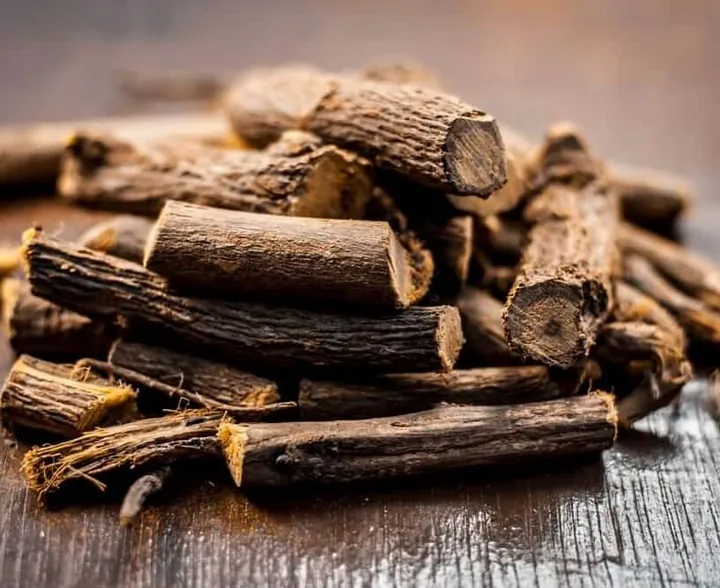
Licorice root (Glycyrrhiza glabra) is one of the oldest herbs in recorded use, valued for soothing the digestive tract and throat and for supporting a balanced stress response. Whole licorice contains glycyrrhizin, which can raise blood pressure in large or long-term amounts, so keep intake moderate and check with a doctor if you have heart, kidney or blood pressure concerns.
What Is Licorice Root?
Licorice root comes from Glycyrrhiza glabra, a tall, woody perennial shrub that grows across the Mediterranean, the Middle East, and Central Asia. The name itself is a clue: in ancient Greek, glykys means sweet and rhiza means root — so the full name simply means "sweet root." And sweet it is — the active compound glycyrrhizin is 30 to 50 times sweeter than table sugar, with no calories attached.
The part you use is the dried root and rhizome (the underground stem that connects the root system). These thick, woody pieces are harvested after three or more years of growth, when the plant has stored its full load of active compounds. Slice one open and you'll see a bright yellow interior — that vivid color comes from the same flavonoids that give licorice much of its medicinal power.
The plant itself grows two to three feet tall with small bluish-purple flowers and pinnate (feather-shaped) leaves. It's a resilient, deep-rooting plant that survives dry, rocky soils where other crops fail. This hardiness is no accident — it's exactly the kind of plant that builds deep chemical reserves in response to environmental pressure.
Today, licorice root is one of the most widely used medicinal herbs in the world. It's a cornerstone of Traditional Chinese Medicine, Ayurveda (India's ancient healing system), traditional Persian medicine, and Western herbalism. It has been studied in thousands of published scientific papers. And yet most people only know it as a candy flavor — a flavor that, ironically, most modern "licorice" candy doesn't even contain. (Most commercial licorice candy uses anise oil, not real licorice root.) The real herb is far more interesting than the candy.
Traditional WisdomThousands of Years of Wisdom
The story of licorice root is, in many ways, the story of medicine itself — spanning every inhabited continent, every major healing tradition, and thousands of years of careful human observation.
Let's start in Egypt. When Howard Carter's team broke the seal on Tutankhamun's tomb in 1922, they found the young pharaoh surrounded by treasures: golden masks, jeweled chariots, alabaster oil jars. They also found licorice root. Buried around 1325 BCE, this offering was meant to accompany the king into the afterlife. For the ancient Egyptians, this wasn't superstition — it was practical. Licorice was used to make "mai sus," a sweet beverage consumed for energy and vitality. They believed strongly enough in its power to send it with their ruler to the next world.
In China, licorice has been a cornerstone of Traditional Chinese Medicine (TCM) for over 3,000 years. Known as Gan Cao (literally "sweet herb"), it was classified as one of the most important tonic herbs in the entire system. What set it apart was its role as a harmonizer: Chinese doctors added it to complex herbal formulas not just for its own properties, but because it balanced and amplified the effects of the other herbs. It was the herb that made all the other herbs work better together — a botanical diplomat. The ancient text Shennong Bencao Jing (one of the oldest Chinese pharmacopoeia texts, compiled around 200 CE but referencing much older oral traditions) listed it in the highest tier of medicines: those that strengthen the body over time without causing harm.
In the ancient Middle East, Assyrian clay tablets from the 7th century BCE list licorice root among herbs used to treat respiratory ailments and quench thirst during long campaigns. Hippocrates, the Greek physician known as the "Father of Medicine," wrote about it in the 5th century BCE, recommending it for shortness of breath and as a thirst-quencher. When Alexander the Great sent his armies on campaigns stretching from Greece to India, his soldiers carried licorice root — it helped them sustain energy and manage thirst during long marches through the heat. Roman soldiers used it the same way centuries later.
In Ayurveda, India's 5,000-year-old healing system, licorice root is called Yastimadhu (also known as Mulethi in Hindi). It was a go-to herb for the voice — singers, priests, public speakers, and teachers used it to soothe and strengthen their vocal cords. It was also used for respiratory health, stomach ulcers, and as a general tonic for vitality. This use continues today: in India, many still chew a stick of licorice root before singing or speaking publicly.
In medieval Europe, monks grew licorice extensively in monastery gardens. The Dominican monks at Pontefract in Yorkshire, England, turned it into one of the region's most famous products — Pontefract cakes, small stamped sweets made from genuine licorice root extract. These were sold as both medicine and confection for centuries.
Across Indigenous North America, Plains tribes used the native American species Glycyrrhiza lepidota (wild licorice) for toothaches, fevers, and digestive complaints. The root was also used as a food source. Indigenous knowledge keepers across the continent recognized this plant's power long before European settlers arrived.
What ties all these traditions together is a remarkable consistency: nearly every culture that encountered licorice root discovered the same core uses — gut soothing, respiratory support, energy, and hormonal balance. That kind of cross-cultural agreement is one of the strongest signals that a plant has real, observable effects on the human body.
Sourcing MattersThe Wildcrafted Difference
Think about the difference between a domesticated dog and a wild wolf. Both are the same species at their core. But the wolf has spent its life fighting for survival — running miles each day, hunting in harsh weather, facing real threats. That life of pressure has built an animal of extraordinary physical capability. The dog, raised in a climate-controlled home with food delivered daily, has lost most of that edge. It's comfortable. But it's not as capable.
Wild plants are the wolves. Farmed herbs in controlled greenhouse environments — perfect soil, consistent water, zero competition, chemical fertilizers — are more like the dog. Comfortable. Predictable. But missing something essential.
When a licorice plant grows wild in the rocky slopes of the Mediterranean or the dry steppes of Central Asia, it is under constant pressure. Drought, poor soil, insects, fungal threats, competition from other plants. To survive, the plant pours energy into producing phytochemicals — the plant's natural defense and signaling molecules. These are the same compounds that give medicinal herbs their therapeutic value. Glycyrrhizin, glabridin, liquiritin, the triterpenoid saponins — all of these are produced in higher concentrations when the plant has had to work for them.
The licorice root in Drink Inc's Klara Boost and Klara Tea is certified organic — grown without synthetic pesticides, herbicides, or fertilizers. This matters both for what it leaves out (you don't want chemical residues in your daily supplement) and for what it produces (organically grown plants tend to develop denser phytochemical profiles than conventionally farmed equivalents). We source from growers who understand that stress-tested plants make stronger medicine, and our formulation process preserves those active compounds in an alcohol-free liquid extract your body can absorb quickly.
The ScienceWhat's Inside — Key Active Compounds
Licorice root isn't magic. It's chemistry. Here are the primary compounds doing the work inside this ancient root:
Glycyrrhizin (Glycyrrhizic Acid)
The star compound. Glycyrrhizin is the substance responsible for licorice's intense sweetness — it's 30 to 50 times sweeter than sugar, though it doesn't act like sugar in your body. More importantly, it has potent anti-inflammatory and anti-viral properties. Research suggests it works by blocking the enzymes that trigger inflammatory pathways and by interfering with the outer envelope of certain viruses, making it harder for them to enter your cells. Glycyrrhizin is also responsible for the herb's effect on cortisol (your body's main stress hormone) — it inhibits the enzyme that breaks cortisol down, helping your body hold onto more of it during times of stress or depletion.
Glycyrrhetic Acid
When your body metabolizes glycyrrhizin, it produces glycyrrhetic acid. This is the active anti-inflammatory metabolite (breakdown product) that does much of the heavy lifting in your tissues. Studies have evaluated its anti-inflammatory activity, and it has long been associated with the herb's traditional reputation for supporting the body's natural defenses.
Glabridin & Chalcones
Glabridin is a flavonoid (plant pigment compound) with impressive range: it acts as an antioxidant, has anti-inflammatory effects, interacts with estrogen receptors (which may explain licorice's traditional use for hormonal conditions), and inhibits tyrosinase — the enzyme your skin uses to produce melanin (the pigment that causes dark spots). This last effect has made glabridin a sought-after ingredient in cosmetic skin-brightening products in Asia and beyond.
Liquiritin & Isoliquiritin
These flavonoids contribute to licorice root's antioxidant activity and have shown anti-depressant effects in some animal studies, suggesting a potential role in mood support. They also contribute to the herb's anti-inflammatory and liver-protective properties, working alongside glycyrrhizin in a synergistic (working together, more powerful than separately) way.
Triterpenoid Saponins & Polysaccharides
Saponins (soap-like compounds found in many plants) contribute to the expectorant (mucus-loosening) effect that makes licorice so useful for coughs and respiratory congestion. The polysaccharides (complex sugars that form a gel-like coating) are what protect and soothe the gut lining, acting almost like a bandage on inflamed mucous membranes. These gel-forming compounds are a key reason licorice has been used for ulcers and gastritis for thousands of years.
Eight Ways Licorice Root May Support Your Health
Soothes & Supports the Gut Lining
The polysaccharides in licorice root form a soothing layer along the digestive tract. Research has explored its effects on gastric acid secretion and on the body's natural mucus barrier. It has long been used traditionally to support everyday digestive comfort and the stomach lining.
Supports Adrenal Recovery
Glycyrrhizin inhibits the enzyme 11-beta-HSD2, which breaks down cortisol in the body. By slowing this breakdown, licorice root may help your body conserve cortisol during periods when the adrenal glands are depleted from chronic stress. This is why it appears in traditional formulas for adrenal fatigue and burnout recovery.
Supports a Healthy Inflammation Response
Glycyrrhetic acid has been studied for its anti-inflammatory activity. It may help support a normal, balanced inflammation response as part of a healthy daily routine.
Supports Respiratory Comfort
Licorice root has been traditionally valued as an expectorant — helping clear mucus from the airways. For thousands of years it has been used to soothe the throat and support comfortable breathing during seasonal changes.
Supports the Liver
Glycyrrhizin has been studied for its hepatoprotective (liver-supportive) effects. Research suggests licorice preparations may support healthy liver function as part of an overall wellness routine.
Supports the Body's Natural Defenses
Glycyrrhizin and glycyrrhetic acid have been studied for their effects on cellular processes. Licorice is traditionally valued for its supportive properties throughout the body.
Hormonal Balance
Glabridin interacts with estrogen receptors in a modulating way — meaning it may support estrogen balance rather than simply increasing it. This may explain the traditional use of licorice root for PMS, menopausal symptoms, and other hormone-related conditions. The herb's effect on cortisol also has downstream effects on other hormones in the stress-hormone cascade.
Brightens Skin
Glabridin inhibits tyrosinase, the enzyme your skin uses to produce melanin (skin pigment). This makes licorice root extract one of the most popular natural skin-brightening ingredients in cosmetics. Taken internally, it may help address the root inflammatory causes of skin conditions like eczema and redness. Applied topically, glabridin is a highly sought-after cosmetic ingredient, especially in Korean and Japanese beauty formulations.
The Modern Wellness Concerns Licorice Root Is Traditionally Used For
We live in a country where everyday digestive discomfort, post-meal heaviness, occasional reflux, and chronic burnout are part of life for millions of busy, stressed, sleep-deprived adults. Licorice root has been used traditionally in many of these contexts for thousands of years.
Everyday Gut Comfort: The modern diet — processed foods, refined sugars, alcohol, frequent antibiotic use — can be hard on the digestive lining. Research suggests that the polysaccharides in licorice root may help support the mucous membrane that lines the gut, contributing to a more comfortable, resilient digestive experience.
Post-Meal Burning & Reflux Sensations: Some studies have evaluated licorice root preparations for their effects on the frequency and intensity of post-meal burning sensations. Licorice has been traditionally used to support the body's own mucus barrier and to soothe the digestive tract.
Stomach & Gut-Lining Support: Licorice root has been used for centuries to soothe and support the stomach lining. Its anti-inflammatory and gut-coating effects make it a long-standing traditional ally for everyday digestive comfort.
Adrenal Fatigue & Burnout Recovery: Chronic stress can lead to dysregulated cortisol patterns — too much in the morning (anxiety, poor sleep) or too little throughout the day (exhaustion, brain fog). Licorice root's glycyrrhizin has been studied for its effect on extending the half-life of cortisol in the body, which may support a calmer stress response when combined with rest and lifestyle changes.
Throat & Respiratory Comfort: Whether it's a lingering cough or a scratchy throat during seasonal changes, licorice root has been used traditionally for respiratory comfort for thousands of years. Research supports its expectorant effects.
Healthy Liver Function: Several studies have evaluated glycyrrhizin's hepatoprotective effects — supporting healthy liver function and healthy fat metabolism in liver cells as part of a broader lifestyle approach.
Hormonal Balance Support: From PMS to the transitions of midlife to everyday adrenal-hormone fluctuations, licorice root's dual action on estrogen pathways (through glabridin) and cortisol regulation makes it a multi-target herb in traditional wellness practice.
For the Healthy & ThrivingYou Don't Need to Be Sick to Benefit
Here's a truth most supplement companies won't tell you: the most powerful use of herbal medicine isn't treating disease. It's building resilience before disease ever shows up. If you're already healthy — exercising regularly, eating well, sleeping enough — licorice root can be a meaningful upgrade to your daily performance and longevity toolkit.
For athletes and active people: The anti-inflammatory properties of licorice root may support faster recovery from intense training. Less systemic inflammation means less soreness, faster tissue repair, and more consistent energy between workouts. Some athletes also report that the adrenal support helps them avoid the burnout that comes with heavy training blocks — that feeling of being overtrained and depleted.
For singers, teachers, and public speakers: This use goes back thousands of years — and it still works. Licorice root soothes and coats the throat, reduces vocal cord inflammation, and can help maintain voice quality through heavy use. In Ayurvedic tradition, this was one of its primary uses. If your livelihood or passion depends on your voice, this herb is worth knowing.
For high-stress professionals: If you're running on deadline pressure and caffeine, your adrenal glands are probably not thanking you. Licorice root's cortisol-extending effect makes it a useful buffer during high-stress sprints — helping your stress response system stay functional rather than burning out. It's not a replacement for sleep and stress management, but it's a meaningful support.
For gut maintenance: Even people with no diagnosed gut condition benefit from a soothed, well-protected gut lining. If you eat less than perfectly (and who doesn't?), the anti-inflammatory and mucilaginous (gel-forming, gut-coating) effects of licorice root offer daily maintenance benefits that keep your digestive system resilient.
A word on caution: At very high doses or with prolonged use of concentrated extracts, glycyrrhizin can cause elevated blood pressure and low potassium levels through a mineralocorticoid effect (similar to how some hormones cause the body to retain sodium and lose potassium). The amounts present in Klara Boost as part of a multi-herb formula are within safe ranges for most people. However, if you have high blood pressure, heart disease, kidney disease, or are pregnant, please consult a healthcare provider before use. Transparency here is non-negotiable.
How to Use ItGetting Licorice Root Into Your Day
Licorice root is available in many forms: dried root for tea, capsules, powders, extracts, lozenges, and liquid tinctures. The method of preparation matters for both absorption and convenience.
In Klara Boost, licorice root is delivered as a full-spectrum liquid extract — meaning the active compounds have been drawn out of the root and suspended in a solution your body can absorb quickly, without the need to digest a capsule or steep a tea. The formula is alcohol-free (a key point for those who avoid alcohol for any reason) and contains the whole-root extract rather than isolated fractions like DGL (deglycyrrhizinated licorice). DGL has had the glycyrrhizin removed to reduce blood pressure concerns — but in doing so, it also loses much of the anti-inflammatory, antiviral, and adrenal-supporting activity. Drink Inc uses the full-spectrum root to deliver the complete therapeutic profile.
In Klara Tea, licorice root appears alongside slippery elm bark — two of the most-traditional digestive-soothing herbs combined in a single tea. This combination has long been used to support everyday digestive comfort, as both herbs are traditionally used to soothe the gut lining.
Suggested use (Klara Boost): 30 drops in water, juice, a smoothie, or even your morning coffee, once daily. You can hold the liquid under your tongue for a moment before swallowing to allow some absorption directly through the mucous membranes of the mouth — a faster delivery route than digestion alone.
Suggested use (Klara Tea): One to two teaspoons of loose-leaf tea in 8–10 oz of boiling water, steeped for 10–15 minutes, then strained. The longer steeping time extracts more of the mucilaginous (gel-like, gut-soothing) compounds.
Find It In Our ProductsLicorice Root, Delivered the Right Way
Whole-root, full-spectrum, alcohol-free, and certified organic. Paired with five other powerful herbs in our signature immune and vitality formulas.
Klara Boost
Licorice root plus astragalus, echinacea, red root, suma, and eleuthero in one 30mL alcohol-free liquid dropper. 30 servings. Organic, Non-GMO, No Sugar, No Preservatives. 30-day money-back guarantee.
Klara Tea
Licorice root paired with slippery elm bark in a premium loose-leaf digestive-comfort tea. Two of the most-traditional gut-soothing herbs combined — for everyday digestive comfort and a calming daily ritual. Vegan, Gluten-Free, Non-GMO, No Sugar.
The ResearchWhat the Science Shows
Licorice root is one of the most thoroughly studied medicinal plants on earth. Thousands of peer-reviewed studies have been published on its compounds — from bench science (test tube and animal studies) to clinical trials in human patients. The picture that emerges is consistent with what traditional healers observed across thousands of years.
A large body of research has explored glycyrrhizin's effects on the body's defenses. A 2005 review by Fiore et al. in Phytotherapy Research documented effects across multiple cellular models. The proposed mechanism — interacting with the lipid envelope of certain viruses — has been studied in multiple independent papers.
On the liver-support front, research in Japan is particularly notable. Van Rossum et al. (1998) reported on glycyrrhizin formulations used clinically in Japan for decades. Multiple studies have evaluated reductions in liver enzyme levels and markers of liver inflammation in study participants receiving glycyrrhizin.
For digestive comfort, research on licorice root preparations has been promising. Several randomized controlled trials (the gold standard of clinical research) have evaluated licorice root preparations for their effects on post-meal burning and digestive discomfort — through a mechanism distinct from conventional approaches.
The anti-inflammatory research is extensive. A 2013 study by Kim et al. in Molecular Cells explored the mechanism by which glycyrrhizic acid suppresses key inflammatory signaling proteins (specifically NF-κB, a master regulator of inflammation in the body). This molecular target is the same one addressed by many pharmaceutical anti-inflammatory drugs — licorice root appears to interact with it through a different, more indirect pathway that carries less risk of side effects at normal doses.
Research on skin benefits has also advanced significantly. A 2013 study by Kwon et al. found that a licorice root extract formula applied topically reduced acne lesion count and skin inflammation, supporting both the topical and internal use of the herb for skin health.
The research is clear: licorice root is not folklore. It's a pharmacologically active plant with documented mechanisms and real-world clinical applications.
Frequently asked questions
Is licorice root the same as licorice candy?
No. Most commercial licorice candy — including many "black licorice" products — is flavored with anise oil, not actual licorice root. Real licorice root extract has a distinct sweet, slightly earthy flavor. True licorice root candy does exist (traditional Pontefract cakes from England, for example, or real Dutch drop), but it's becoming increasingly rare. The medicinal herb and the candy are essentially different things for most practical purposes.
Can licorice root raise my blood pressure?
At high doses or with prolonged use, glycyrrhizin can cause elevated blood pressure and low potassium through a mineralocorticoid effect (the same mechanism that certain hormones use to cause sodium retention). This is a real concern and we take it seriously. The amounts present in Klara Boost as part of a balanced multi-herb formula are well within ranges considered safe for most healthy adults. However, if you have high blood pressure, heart disease, kidney disease, or edema, please speak with your healthcare provider before using any licorice root product. Pregnant women should also consult their doctor first.
What is the difference between whole licorice root and DGL (deglycyrrhizinated licorice)?
DGL is licorice root that has had most of the glycyrrhizin removed — typically to greater than 97% reduction. This makes DGL safer for people concerned about blood-pressure effects, and it retains gut-soothing properties. However, removing glycyrrhizin also removes much of the anti-inflammatory and adrenal-supporting activity that the whole root is traditionally valued for. Drink Inc uses whole-root extract to preserve the full traditional profile. If you have blood-pressure concerns, DGL is a safer alternative — but it is a more limited herb.
How long does it take to feel the effects of licorice root?
For acute gut soothing and throat comfort, many people notice effects within 30 to 60 minutes. For longer-term benefits like adrenal support, reduced chronic inflammation, and improved gut integrity, consistent daily use over four to eight weeks tends to show the clearest results. Like most herbal medicines, licorice root is most effective as a consistent daily practice rather than an occasional supplement.
Can I use licorice root if I'm on medication?
Licorice root may interact with some medications — particularly diuretics, blood pressure medications, corticosteroids, and medications processed by the liver's CYP450 enzyme system. It may also interact with some hormonal medications. If you take any prescription medications, please discuss licorice root use with your prescribing physician or pharmacist before starting. This isn't meant to be alarming — many herbal supplements require this same conversation — but it's important information to share with your healthcare team.
Sources
- Asl MN & Hosseinzadeh H (2008). Review of pharmacological effects of Glycyrrhiza sp. and its bioactive compounds. Phytotherapy Research, 22(6), 709–724.
- Fiore C, et al. (2005). Antiviral effects of Glycyrrhiza species. Phytotherapy Research, 19(2), 89–94.
- van Rossum TG, et al. (1998). Glycyrrhizin as a potential treatment for chronic hepatitis C. Alimentary Pharmacology & Therapeutics, 12(3), 199–205.
- Stormer FC, et al. (1993). Glycyrrhizic acid in liquorice: evaluation of health hazard. Food and Chemical Toxicology, 31(4), 303–312.
- Kim JK, et al. (2013). Glycyrrhizic acid affords robust neuroprotection in the postischemic brain via anti-inflammatory effect. Molecules, 18(10), 12500–12519.
- Kwon HH, et al. (2013). Clinical and histological effect of a low glycaemic load diet in treatment of acne vulgaris in Korean patients: a randomized controlled trial. Acta Dermato-Venereologica, 92(3), 241–246.

Written by the Drink Inc editorial team. We cite our sources, avoid hype and update guides as new research comes out. Questions or corrections: info@drink-products.com.
† These statements have not been evaluated by the Food and Drug Administration. Drink Inc products are not intended to diagnose, treat, cure, or prevent any disease. Talk with your healthcare provider before starting any supplement, especially if you are pregnant, nursing, take medication, or have a medical condition.