
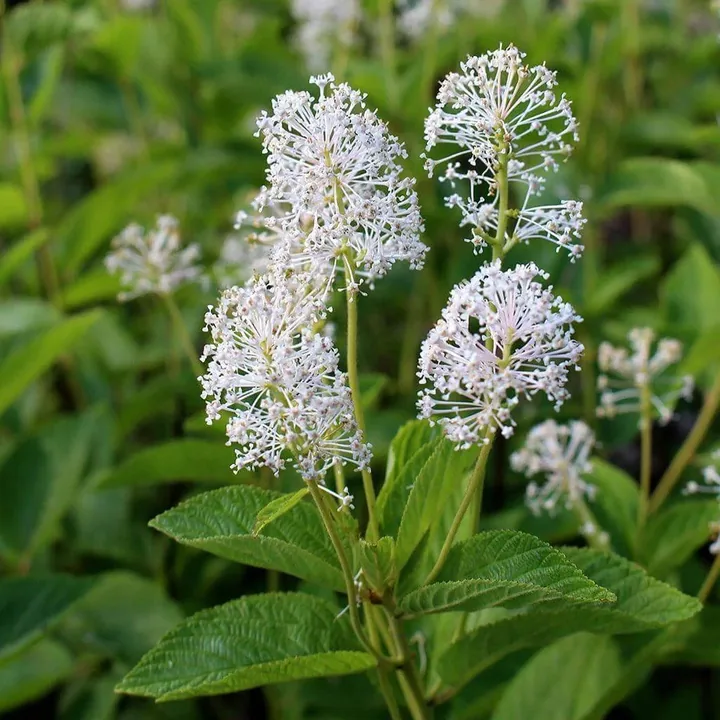
Red root (Ceanothus americanus), also called New Jersey tea, is a North American shrub whose root herbalists use to support the lymphatic system. It has a long traditional record but little modern clinical research, so it is best understood as a traditional herb used in blends.
What Is Red Root?
Red Root (Ceanothus americanus) is a modest shrub. It does not announce itself. It grows in open woodlands, prairies, and rocky hillsides from southern Canada down through the eastern United States all the way to Texas. Its small white flowers bloom in clusters during early summer, giving it its other common name: Wild Snowball. Its leaves were dried and used as a tea substitute during the American Revolution, earning it yet another name — New Jersey Tea.
But the part that matters most is underground. When you pull this plant from the ground, the root is striking — a deep, vivid red. That crimson color is not just a curiosity. It is a signal of the dense tannins, alkaloids, and triterpene acids packed into that root tissue. Native American healers saw that color and knew what it meant: this plant was medicine for the blood and the body’s internal waterways.
The plant belongs to the Rhamnaceae family and is closely related to species used in Traditional Chinese Medicine. The root bark and inner root are the parts traditionally harvested and used medicinally. Unlike many popular herbs that come from distant parts of the world, Red Root is a native North American treasure — one that grew in your ancestors’ backyard and was understood by the people who lived here long before modern medicine had a name for what it did.
What Red Root does best is support the lymphatic system — the body’s often-overlooked drainage and waste-removal network. Think of the lymphatic system like the storm drain system of a city. When it flows freely, everything stays clean. When it gets blocked, waste backs up, and the whole system suffers. Red Root helps keep those channels open and moving.
Traditional UseA History Rooted in Tradition
Long before European settlers arrived on the North American continent, Red Root was already a respected medicine. Indigenous tribes across the eastern half of the continent knew this plant well, and their uses of it were remarkably consistent — a sign that generations of careful observation had confirmed what it did.
The Cherokee people used Red Root to treat colds, stomach problems, and as a blood cleanser. They understood instinctively that a clean, freely flowing internal environment was key to staying well. When someone fell ill with a fever or recurring infections, Red Root was often part of the response — not just to fight the immediate problem, but to help the body clear what had accumulated.
The Iroquois used Red Root as a gargle for sore throats, swollen tonsils, and mouth sores. The astringent tannins in the root helped tighten inflamed tissue and create an environment less hospitable to harmful microbes. This is not folk superstition — it is practical plant chemistry that matches what we understand today about tannins and antimicrobial activity.
The Mohegan, Delaware, Ojibwe, and Meskwaki peoples all documented uses of this plant for respiratory complaints, swollen glands, and general cleansing. What is remarkable is how well these traditional uses map onto what we now understand about lymphatic function. Swollen glands are swollen lymph nodes — a sign that the lymphatic system is working hard and needs support. These healers were targeting the root cause, not just the symptom.
When European colonists arrived, they quickly adopted Red Root as well. During the American Revolution, when patriots boycotted British tea, dried Red Root leaves became one of the most popular tea substitutes in the colonies — particularly in New Jersey, where it grew abundantly. That is how it earned its most lasting common name.
In the 19th century, a group of American physicians known as the Eclectic doctors — practitioners who integrated Native American plant knowledge with European herbal traditions — became the most rigorous early researchers of Red Root. Dr. Finley Ellingwood, one of the most respected Eclectic physicians, wrote that Red Root was “one of the most reliable agents for conditions of the lymphatic system.” Harvey Felter and John Lloyd documented it extensively in King's American Dispensatory (1898), describing its use for enlarged spleen, swollen lymph nodes, tonsillitis, and what they called “torpid lymphatics” — a sluggish lymphatic system. This was not fringe medicine. This was the mainstream American herbal tradition, backed by decades of clinical observation.
Somewhere in the 20th century, as pharmaceutical drugs became dominant, Red Root faded from common use. But the knowledge was never lost. Today, skilled herbalists and naturopathic practitioners continue to reach for it precisely when clients present with the signs of lymphatic burden: swollen nodes, recurring infections, chronic fatigue, and that heavy, foggy feeling that comes when the body’s waste-removal system is overwhelmed.
SourcingThe Wildcrafted Difference
Here is something most supplement companies never talk about: where a plant grows and how it lives shapes how powerful its medicine is. Think about the difference between a wolf and a domesticated dog. Both are the same species at their core, but the wolf must fight for survival every single day. It navigates weather, predators, scarcity, and changing seasons. That constant challenge makes it sharper, stronger, more resilient. A domesticated dog, fed on schedule and sheltered from the world, never develops that same edge.
Plants work the same way. A Red Root shrub growing wild in a rocky hillside in the Appalachian foothills faces real threats. Harsh winters, summer droughts, insect pressure, competition for soil nutrients. To survive, it pushes its chemistry hard — producing more tannins, more alkaloids, more triterpene acids than it would ever need to if it were babied in a controlled agricultural field. That survival chemistry is exactly what makes wildcrafted Red Root so potent as medicine. The plant's stress becomes your strength.
At Drink Inc, the Red Root in Klara Boost is wildcrafted — harvested from its natural habitat by skilled foragers who know how to take what the land offers without depleting it. This is done with deep respect for the ecosystems these plants call home, following ethical wildcrafting standards that ensure the populations can regenerate and thrive for generations to come. When you hold a bottle of Klara Boost, you are holding the concentrated survival chemistry of a wild plant that earned its potency the hard way.
Plant ChemistryWhat's Inside Red Root — The Active Compounds
Red Root's medicine comes from a specific set of naturally occurring compounds. Here is what they are and what each one does in plain language.
Ceanothic Acid & Triterpene Acids
These are the heavy hitters. Ceanothic acid and related triterpene acids are responsible for Red Root's anti-inflammatory and potential anti-coagulant (blood-thinning) effects. Research on these compounds suggests they may help reduce systemic inflammation and support healthy blood flow through the lymphatic and circulatory systems.
Alkaloids (including Ceanothine)
The alkaloids in Red Root, particularly ceanothine, are believed to be responsible for its signature lymphatic action. These nitrogen-containing compounds interact with smooth muscle tissue and may help stimulate lymphatic movement — essentially encouraging the lymphatic vessels to pump more efficiently.
Flavonoids (Quercetin & Myricetin)
You may have heard of quercetin — it is one of the most studied antioxidants in nature. Red Root contains meaningful amounts of quercetin and myricetin, both of which help neutralize free radicals and support the immune system. These flavonoids also have natural anti-histamine properties, which may explain why Red Root has traditionally been used for respiratory and sinus complaints.
Tannins
Tannins are astringent compounds that create a drying, tightening effect on inflamed or swollen tissue. This is the chemistry behind Red Root's traditional use as a gargle for sore throats. Tannins bind to proteins and create a protective barrier on mucous membranes, making them less hospitable to microbes and reducing swelling in irritated tissue.
What Red Root May Do for You
Based on centuries of traditional use and emerging research, here is what this remarkable herb may help with.†
Lymphatic Flow & Drainage
Red Root's most celebrated action. It may help stimulate the movement of lymph fluid through the body's drainage network, reducing congestion and helping the lymphatic system do its primary job: clearing waste and protecting immunity.
Spleen Support
The spleen is the largest lymphatic organ, filtering blood and storing immune cells. Red Root has long been used to support spleen function, particularly when the spleen is under stress from chronic infection or immune burden.
Blood & Internal Cleansing
Traditional herbalists called Red Root a “blood purifier.” In modern terms, it may help the body clear metabolic waste and cellular debris — supporting the natural detoxification processes that keep you feeling clean and energized from the inside out.
Respiratory & Throat Support
The astringent tannins in Red Root may help soothe inflamed throat tissue, calm swollen tonsils, and reduce mucus congestion. This is one of its oldest documented uses across multiple Native American tribes.
Immune System Support
The immune system depends on a healthy lymphatic system. Immune cells — white blood cells — travel through lymph fluid to reach sites of infection. When lymph flows freely, your immune response can get where it needs to go, faster.
Anti-Inflammatory Action
Ceanothic acid and quercetin both have documented anti-inflammatory properties. Red Root may help calm the kind of low-grade, chronic inflammation that underlies many modern health complaints — from joint aches to skin issues to persistent fatigue.
Common Health Concerns This Herb May Address
Many of the health struggles that Americans deal with every day have an underlying connection to lymphatic health. Here is how Red Root may help with some of the most common ones.
Swollen Lymph Nodes
Millions of people notice swollen glands in their neck, armpits, or groin — especially when they are fighting off a cold or infection. Swollen lymph nodes are simply your lymphatic system working overtime. Red Root may help support the lymphatic system during these periods of high demand, potentially helping your nodes return to normal size more comfortably.
Recurring Colds & Low Immunity
If you seem to catch every bug that goes around, your lymphatic system may be congested or sluggish. A backed-up lymphatic system slows the delivery of immune cells to where they are needed. Red Root is traditionally used to address this root cause — not just to fight an individual cold, but to help build a stronger internal defense system over time.
Chronic Fatigue & Brain Fog
When the lymphatic system is burdened, cellular waste products accumulate in tissues. This creates a kind of internal heaviness — the fatigue and fog that people often describe as feeling “off” or “run down” without a clear medical explanation. By supporting lymphatic drainage, Red Root may help lift that burden and restore a sense of vitality.
Sinus Congestion & Chronic Mucus
The sinuses are heavily connected to the lymphatic system. Chronic sinus congestion often reflects lymphatic stagnation in the head and neck region. Red Root has been used traditionally for exactly this kind of complaint, and its flavonoid content may provide mild anti-histamine support as well.
Post-Illness Recovery
After a significant illness, the body is often left with a heavy load of immune system byproducts — dead cells, pathogens, inflammatory debris. The lymphatic system must clear all of this. Red Root may support a faster, more thorough recovery by helping the lymphatics process this post-illness load more efficiently.
Skin Issues Linked to Internal Toxin Load
The skin is often a mirror of what is happening inside the body. When internal waste-removal systems are overwhelmed, the body sometimes tries to push toxins out through the skin, contributing to breakouts, rashes, and dullness. Supporting lymphatic flow with Red Root may help relieve this internal pressure and allow cleaner, clearer skin to emerge.
Sedentary Lifestyle & Poor Circulation
Unlike the blood circulatory system, which has the heart to pump it, the lymphatic system has no dedicated pump. It relies on body movement and muscle contractions to move. People who sit for long stretches — at desks, on planes, in cars — are especially prone to lymphatic sluggishness. Red Root may help compensate for the movement your body is not getting enough of.
Performance & PreventionFor the Healthy & Thriving — Using Red Root as a Daily Tonic
You do not have to be sick to benefit from Red Root. In fact, some of the most compelling uses of this herb are for people who are already healthy and want to stay that way — or perform at a higher level.
If you exercise hard and often, your body produces a significant amount of metabolic waste: lactic acid, dead cells, inflammatory byproducts. The lymphatic system is responsible for clearing much of this. A daily lymphatic tonic like Red Root may help your body process this post-workout load faster, meaning less soreness, faster recovery, and the ability to train again sooner.
If you travel frequently, especially by air, you are spending hours in cramped, sedentary conditions breathing recirculated air loaded with other people's respiratory particles. Your lymphatic system is working harder than usual. Red Root is an ideal travel companion — something to take before, during, and after travel to keep your lymphatics primed and your immune response ready.
If you sit at a desk most of the day — as most professionals do — you are spending eight or more hours with very little muscle movement to pump your lymph. Red Root may help compensate for this, supporting the kind of internal circulation that your lifestyle makes difficult to achieve through movement alone.
And for those doing intentional detox or seasonal cleanses, Red Root is one of the most important herbs to include. Any detox protocol worth its salt needs to account for lymphatic drainage. Without adequate lymphatic support, mobilized toxins can recirculate in the body rather than being eliminated. Red Root helps open the exit doors.
DirectionsHow to Use Red Root
Traditionally, Red Root was prepared as a decoction — the root was simmered in water for an extended period to extract its active compounds. This worked well for the alkaloids and tannins, though it required planning and time. Today, the most effective and convenient way to take Red Root is as a liquid tincture or extract, where the active compounds are already suspended and immediately bioavailable.
In Klara Boost, Red Root is included as part of a carefully formulated alcohol-free liquid blend. You take 30 drops in a glass of water, juice, or your morning smoothie, once daily. The liquid format means your body absorbs the active compounds quickly — far faster than capsules or powders, which must be broken down in the digestive system first.
Most herbalists recommend Red Root as a medium-term tonic — taken consistently for several weeks to support ongoing lymphatic health, rather than as an occasional acute remedy. The lymphatic system responds to consistent support, not just one-off doses.
Precautions: Red Root has mild blood-thinning properties due to its triterpene acids. If you are taking prescription blood thinners, are pregnant, or are preparing for surgery, consult your healthcare provider before use. It is not recommended in high doses for extended periods without professional guidance.
Found InRed Root Is in Every Bottle of Klara Boost
Klara Boost combines wildcrafted Red Root with five other time-tested immune herbs in a clean, alcohol-free liquid dropper. No sugar. No preservatives. No shortcuts.
$16.99 $24.99
SAVE 32% — Limited-Time Sale Price
ScienceWhat the Research Shows
Red Root is not as heavily studied in modern clinical trials as some more widely known herbs like Echinacea or Astragalus. But that does not mean the evidence base is thin — it simply means most of the evidence comes from two powerful sources: a rich ethnobotanical record spanning centuries, and laboratory research on its specific chemical constituents.
The strongest evidence for Red Root comes from the field of ethnobotany. Daniel Moerman's exhaustive Native American Ethnobotany database documents its use across multiple tribes for the same core applications: lymphatic support, throat conditions, and blood cleansing. When independent cultures separated by hundreds of miles arrive at the same uses for the same plant, that convergence carries significant weight.
On the chemistry side, ceanothic acid and related triterpene acids have been studied for anti-inflammatory and potential anti-platelet (anti-coagulant) activity. Research published in Planta Medica in the 1980s examined the biological activity of ceanothic acid and found meaningful anti-inflammatory effects. Studies on related Ceanothus species used in Traditional Chinese Medicine have demonstrated lymphocyte-activating activity in the alkaloid fractions — lending scientific support to the traditional use of this plant family for immune and lymphatic conditions.
The flavonoids quercetin and myricetin, found in meaningful concentrations in Red Root, are themselves among the most studied plant compounds in the world. Quercetin's anti-inflammatory, anti-histamine, and immune-supportive properties are well-documented in peer-reviewed literature. Their presence in Red Root adds a solid evidence base to the plant's traditional uses.
The Eclectic physicians of the 19th century, who left behind meticulous clinical observations in texts like King's American Dispensatory, provide some of the most detailed records of Red Root's effects in human patients. While not clinical trials by modern standards, these records represent decades of systematic observation across thousands of patients — a form of evidence that should not be dismissed.
Frequently asked questions
What is Red Root best known for?
Red Root is best known as a lymphatic herb. Its primary traditional use, documented across multiple Native American tribes and 19th-century Eclectic physicians, is supporting the lymphatic system — the body's drainage and immune-cell transport network. It has also been used for sore throats, swollen glands, spleen support, and as a general blood cleanser.
Is Red Root the same as New Jersey Tea?
Yes. New Jersey Tea is one of the most common names for Ceanothus americanus. During the American Revolution, patriots boycotted British tea and dried the leaves of this plant as a substitute — particularly popular in New Jersey, giving the plant its patriotic nickname. Other common names include Wild Snowball and Mountain Sweet. Regardless of the name, the medicinal part is the root, not the leaves.
How long does it take Red Root to work?
Red Root is best thought of as a tonic herb, not an acute remedy. Most herbalists recommend consistent daily use for several weeks to support lasting lymphatic health. Some people notice subtle shifts — clearer sinuses, less post-illness fatigue, reduced swelling in lymph nodes — within the first one to two weeks. Others take longer. It works best as part of a consistent daily routine, which is why Klara Boost is designed as a once-daily supplement.
Is Red Root safe to take every day?
Red Root has a long history of use as a daily tonic with a good safety profile at typical doses. However, it has mild blood-thinning properties due to its triterpene acids. If you are pregnant, nursing, taking blood-thinning medications, or have an upcoming surgery, consult your healthcare provider before use. As with any supplement, it is always smart to talk to a qualified healthcare professional, especially if you have an existing health condition.
Why is Red Root in Klara Boost instead of being sold alone?
Herbs often work better in synergy than in isolation. Klara Boost pairs Red Root's lymphatic action with Echinacea's direct immune activation, Astragalus's deep immune building, Eleuthero's stress resilience, Suma Root's adaptogenic energy, and Licorice Root's anti-inflammatory and adrenal support. Together, these six herbs create a more complete immune and vitality formula than any single herb could on its own. Think of it as a team, not a solo player.
Sources
- Moerman DE. Native American Ethnobotany. Timber Press, 1998.
- Felter HW, Lloyd JU. King's American Dispensatory. Cincinnati: Ohio Valley Company, 1898.
- Harada M, Hirayama Y, Yamazaki R. Biological activities of ceanothic acid derivatives. Planta Medica. 1988.
- Foster S, Duke JA. A Field Guide to Medicinal Plants and Herbs of Eastern and Central North America. 2nd ed. Houghton Mifflin, 2000.
- Duke JA. Handbook of Medicinal Herbs. 2nd ed. CRC Press, 2002.
- Wood M. The Earthwise Herbal: A Complete Guide to New World Medicinal Plants. North Atlantic Books, 2009.

Written by the Drink Inc editorial team. We cite our sources, avoid hype and update guides as new research comes out. Questions or corrections: info@drink-products.com.
† These statements have not been evaluated by the Food and Drug Administration. Drink Inc products are not intended to diagnose, treat, cure, or prevent any disease. Talk with your healthcare provider before starting any supplement, especially if you are pregnant, nursing, take medication, or have a medical condition.