
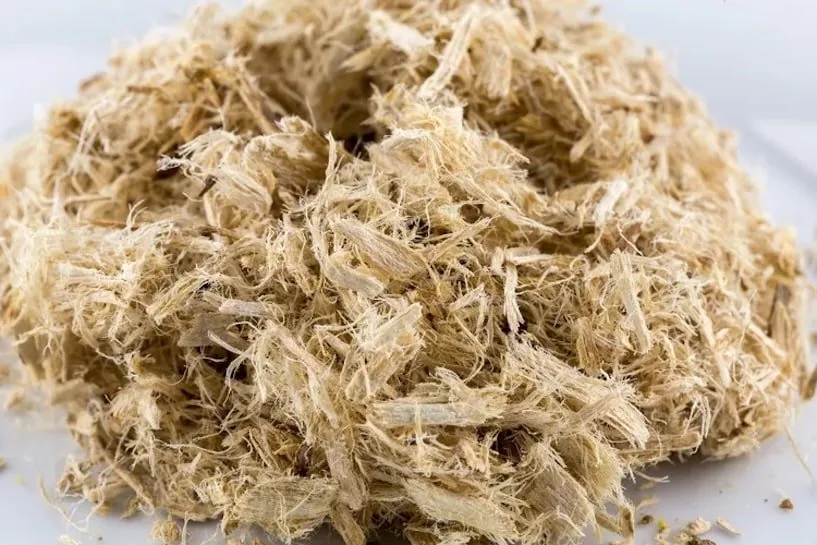
All four soothe the lining of the digestive tract, in different ways. Slippery elm and marshmallow root are mucilage herbs that form a slick, coating gel; slippery elm is thicker and more filling, marshmallow is lighter and best as a cold infusion. DGL is licorice with the glycyrrhizin removed, chewed before meals. Whole licorice root is sweeter and broader-acting, and best kept to moderate amounts, like a cup or two of tea.
What "soothing" herbs actually do
Herbalists call these plants demulcents. Most of them are rich in mucilage, long chains of plant sugars that swell into a smooth, slippery gel when they meet water. You've seen the same thing with chia seeds or okra.
That gel coats whatever it touches: the throat, the esophagus, the stomach lining. It doesn't change your stomach acid. It forms a soft, protective layer over tissue that feels irritated. Because the effect is physical, people often feel it within minutes, which is rare for an herb.
Licorice works differently. It's less about coating and more about the plant's own compounds, which have been studied for their effect on the stomach's natural protective mucus.
Side by sideSlippery elm, marshmallow, DGL and licorice at a glance
| Slippery elm | Marshmallow root | DGL | Whole licorice | |
|---|---|---|---|---|
| Plant part | Inner bark of the red elm | Root of Althaea officinalis | Licorice root, glycyrrhizin removed | Root of Glycyrrhiza glabra |
| How it works | Thick mucilage gel coats | Lighter mucilage coats | Supports the stomach's protective mucus | Soothes; also sweetens blends |
| Texture & taste | Silky, mild, slightly sweet | Thin, mild, neutral | Chewable, licorice flavor | Very sweet |
| Best form | Tea or powder in water | Cold infusion | Chewable tablet before meals | Tea or blend |
| Best for | After meals, evening ritual | Dry, irritated throat; gentle daily use | Before meals | Flavor and broad comfort |
| Main caution | Space 1–2 h from medicines | Space 1–2 h from medicines | Few; taste | Blood pressure, potassium, pregnancy |
Slippery elm: the silky after-dinner herb
Slippery elm (Ulmus rubra) is the inner bark of the red elm, a tree native to eastern North America. The Iroquois, Ojibwe and other nations used it as food during lean winters and as a soothing remedy for the throat, stomach and skin. Early American settlers carried it on long journeys, and it's still an ingredient in over-the-counter throat lozenges today.
Its mucilage is thick. Steep the shredded bark long enough and the tea takes on a soft, almost silky body. That's the part that's doing the work.
What the research says
Clinical research on slippery elm alone is thin. Lab work shows antioxidant activity,1 and a small pilot study found that formulas containing slippery elm improved bowel habits and comfort in people with digestive complaints.2 Most of its reputation rests on centuries of use and a mechanism that's easy to observe: it coats.
How to take it
- Tea: 1–2 teaspoons of shredded bark in 8–10 oz boiling water, steeped 10–15 minutes. Longer steeps are silkier.
- Powder: 1 teaspoon stirred into warm water or oatmeal. It thickens fast.
- Timing: after meals or in the evening, at least 1–2 hours away from medication.
Full history and research in our slippery elm guide.
The gentle oneMarshmallow root: lighter, cooler, gentler
Yes, the candy was originally made from it. Marshmallow (Althaea officinalis) grows in wet meadows across Europe and western Asia, and its root has been used to soothe since ancient Greece. The name Althaea comes from the Greek for "to heal."
Germany's Commission E, the expert panel that evaluated herbal medicines for the German government, approved marshmallow root for irritation of the mouth and throat with an associated dry cough, and for mild irritation of the stomach lining.3 Lab studies suggest its polysaccharides may help support the cells that line mucous membranes.4
How to take it
- Cold infusion: 1–2 tablespoons of cut root in a jar of room-temperature water, covered for 4–8 hours or overnight, then strained. Cold water pulls out the mucilage without the starch.
- Capsules or tea work too, but the cold infusion is the classic.
- Same spacing rule: 1–2 hours from medicines.
DGL: licorice without the blood-pressure worry
DGL stands for deglycyrrhizinated licorice. Manufacturers remove most of the glycyrrhizin, the compound that makes licorice sweet and, in large amounts, can raise blood pressure and lower potassium.
DGL is usually sold as chewable tablets taken about 20 minutes before meals. The chewing matters: traditional thinking is that mixing with saliva helps it work. Research on DGL is older and mixed, but it's widely used, inexpensive and well tolerated.
The sweet oneWhole licorice root: broader, sweeter, use with respect
Whole licorice root (Glycyrrhiza glabra) is one of the oldest herbs in recorded medicine. It has been used for 4,000 years to soothe the stomach and throat, and herbalists add it to blends to bring a formula together. It's also roughly 50 times sweeter than sugar, so a little makes a tea taste rounded without any added sweetener.
The catch is glycyrrhizin. Europe's Scientific Committee on Food suggested that people keep glycyrrhizin intake under about 100 mg a day,5 and the U.S. National Center for Complementary and Integrative Health notes that large amounts of licorice can cause high blood pressure and low potassium.6 A cup or two of a licorice-containing tea is a very different thing from eating a bag of black licorice a day, but moderation is the right instinct.
Skip whole licorice (or ask your doctor first) if you're pregnant, have high blood pressure, heart or kidney disease or low potassium, or take blood pressure medication, diuretics, steroids or digoxin. More in our licorice root guide.
Decision guideHow to choose
Burning or heaviness after meals
Slippery elm tea after eating, or DGL chewed before. Eat slower, and finish dinner 3 hours before bed.
A dry, scratchy, overused throat
Marshmallow root cold infusion, or slippery elm lozenges and tea.
You want a calming evening ritual
Slippery elm with licorice: warm, sweet, silky and caffeine-free.
You have high blood pressure
Choose slippery elm, marshmallow or DGL. Skip whole licorice unless your doctor says otherwise.
You take daily medication
Any of them, but keep a 1–2 hour gap between the herb and your medicine.
You want the gentlest option
Marshmallow root. Mild taste, light texture, easy to take every day.
Can you combine them?
Yes. Slippery elm, marshmallow and licorice together is one of the most traditional gut formulas in Western herbalism. The mucilage herbs provide the coating; licorice adds its own soothing compounds and makes the whole thing taste good. If you'd like to go further, our guide to nine herbs for gut health covers peppermint, ginger, chamomile, fennel and more.
When herbs aren't enough
Soothing herbs are for everyday discomfort. See a doctor, not an herbalist, if you have:
- Heartburn more than twice a week, or symptoms lasting longer than two to three weeks
- Trouble or pain swallowing
- Vomiting, or black or bloody stools
- Unexplained weight loss
- Chest pain, especially with exertion
Frequently asked questions
Is slippery elm or marshmallow root better for the stomach?
Both coat and soothe. Slippery elm is thicker and more filling and works well as a tea or powder. Marshmallow is gentler and thinner and is best as a cold infusion. Many herbalists combine them.
Can I take slippery elm every day?
It's generally considered gentle enough for daily use. Because it coats the digestive tract, take it 1–2 hours apart from medications and other supplements.
What's the difference between DGL and licorice root?
DGL has most of the glycyrrhizin removed, which avoids the blood pressure and potassium concerns of whole licorice. DGL is usually chewed before meals; whole licorice root is used in teas and blends in moderate amounts.
How long does slippery elm take to work?
The coating feeling is often noticeable within minutes because it's a physical effect. Most people use it consistently for a few weeks alongside slower meals, less alcohol and earlier dinners.
Who should avoid whole licorice root?
People who are pregnant, have high blood pressure, heart or kidney disease or low potassium, or take blood pressure medication, diuretics, corticosteroids or digoxin should check with a doctor first.
When should I see a doctor about stomach symptoms?
If you have heartburn more than twice a week, symptoms beyond two to three weeks, trouble swallowing, vomiting, black or bloody stools, unexplained weight loss or chest pain.
Sources
- Langmead L, Dawson C, Hawkins C, et al. Antioxidant effects of herbal therapies used by patients with inflammatory bowel disease: an in vitro study. Aliment Pharmacol Ther. 2002;16(2):197–205.
- Hawrelak JA, Myers SP. Effects of two natural medicine formulations on irritable bowel syndrome symptoms: a pilot study. J Altern Complement Med. 2010;16(10):1065–1071.
- Blumenthal M, Goldberg A, Brinckmann J, eds. Herbal Medicine: Expanded Commission E Monographs. American Botanical Council; 2000. Marshmallow root.
- Deters A, Zippel J, Hellenbrand N, et al. Aqueous extracts and polysaccharides from marshmallow roots (Althea officinalis L.): cellular internalisation and stimulation of cell physiology of human epithelial cells in vitro. J Ethnopharmacol. 2010;127(1):62–69.
- European Commission, Scientific Committee on Food. Opinion on glycyrrhizinic acid and its ammonium salt. 2003.
- National Center for Complementary and Integrative Health. Licorice root. nccih.nih.gov.

Written by the Drink Inc editorial team. We cite our sources, avoid hype and update guides as new research comes out. Questions or corrections: info@drink-products.com.
† These statements have not been evaluated by the Food and Drug Administration. Drink Inc products are not intended to diagnose, treat, cure, or prevent any disease. Talk with your healthcare provider before starting any supplement, especially if you are pregnant, nursing, take medication, or have a medical condition.